


UN Publishes Draft Amendments to GHS Revision 12 on Hazard Classification and Labelling
Reference source : United Nations Economic Commission for Europe (UNECE) - United Nations
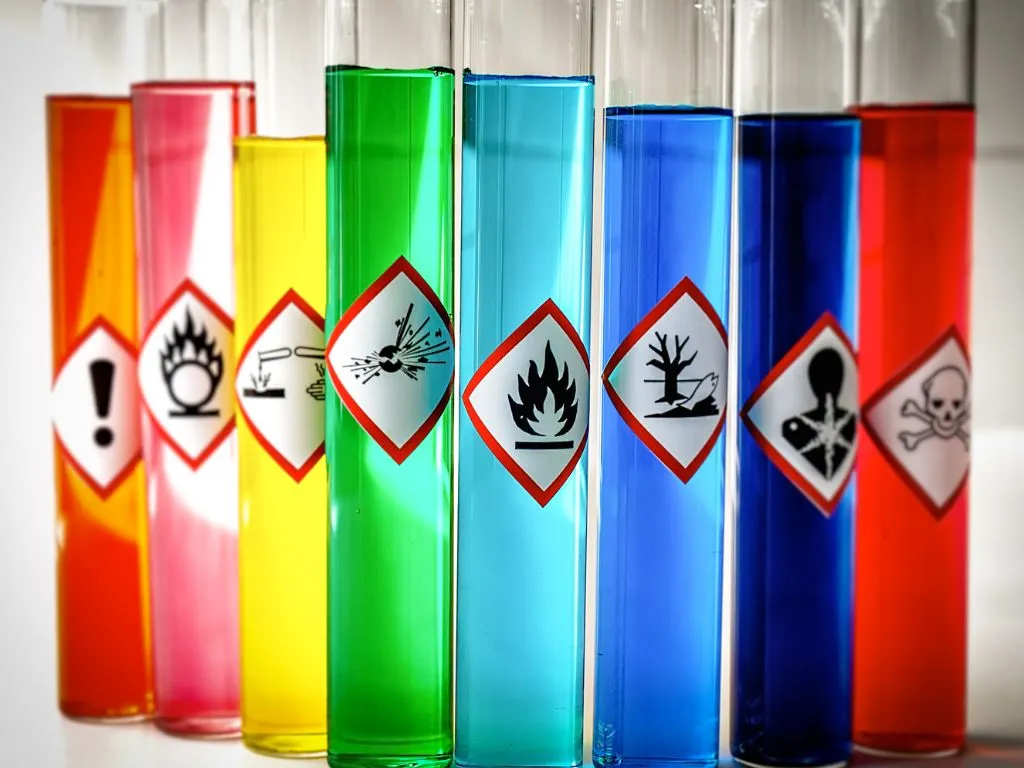
The United Nations (UN) published a comprehensive compilation of proposed changes to the Globally Harmonized System of Classification and Labelling of Chemicals (GHS), in anticipation of its 12th updated version (GHS Rev.12). On 31 August 2026, UN outlined these suggestions in document ST/SG/AC.10/C.4/2026/9, and includes revisions accepted during the 48th and 49th meetings of the UN Sub-Committee of Experts on the GHS. The 49th meeting took place from 8 to 10 July 2026 in Geneva, Switzerland.
Key Insights from the Draft Amendments
The draft presents several revisions to existing GHS provisions:
-
Physical hazard classification: New rules make it clearer what is excluded and what overlaps in classifications that include explosives, self-reactive materials, organic peroxides, materials that ignite spontaneously, and safe explosives. There is a suggestion for further testing and guidance on classifying specific mixtures of these materials.
-
Health hazard classification: Sections 3.2, 3.3, and 3.4 suggest updated criteria for classifying mixtures in terms of skin corrosion, skin irritation, severe eye damage, eye irritation, and skin allergies. This includes new references to the OECD Test Guideline 442B.
-
Precautionary statements: Annex 3 adds new warnings, such as P339, P343, and P355, regarding skin contact and emergency care. The current instructions for firefighting, handling contaminated clothing, storage, and disposal have also been updated.
-
Flammable vapour and gas hazards: A new part, A11.4 in Annex 11, offers guidance about materials and mixtures that could create flammable vapor-air or gas-air combinations, even if they aren't officially labeled as flammable.
Implications for the Stakeholders
Chemical manufacturers, importers, and suppliers of chemicals need to keep an eye on these suggested changes and evaluate how they may affect hazard classification, testing methods, safety data sheets (SDSs), labeling, and emergency response protocols. The changes are still in draft form and await additional review and official approval.
Related News

China Releases Approval Draft of Revised Chemical Safety Label Standard
Read More
Taiwan Updates Hazard Communication Rules in Line with GHS Rev. 8
Read More
China Consults on GHS Rev. 11-Aligned GB Standards
Read More
EU Notifies WTO of Major CLP Update to Implement GHS Revisions 8–10
Read More